Is Renters Insurance Required?
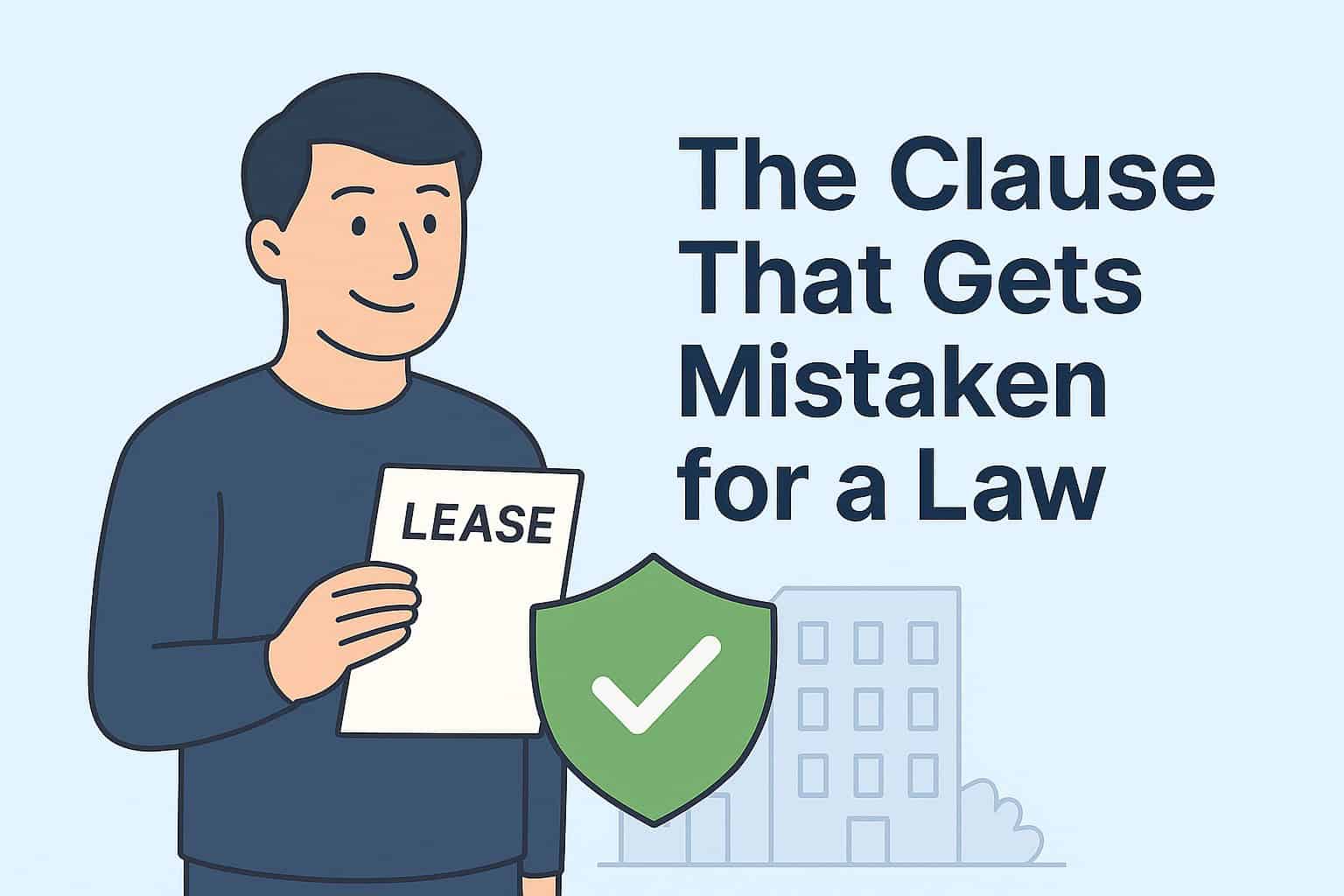
Renters insurance isn’t required by law, but most landlords make it a mandatory lease condition because they want tenants covered for damage or liability issues that could affect the property.
If you’re being asked to get renters insurance, understand that this is a lease obligation rather than a legal one—it’s a right landlords can exercise when setting the terms of their rental agreement.
Key Points
- Renters insurance isn’t a legal requirement—it’s a lease condition set by your landlord.
- Whether you’re in an apartment or subsidized housing, your landlord decides if coverage is required.
- Landlords can require renters insurance—it’s their right.
- Landlords require renters insurance to protect their property and lower their own insurance costs.
- Most landlords require proof of coverage before move-in, though some offer short grace periods after signing.
Is Renters Insurance Required by Law?
No law requires renters insurance—no federal, state, or local regulation mandates that renters carry coverage.
The confusion comes from mixing up legal requirements with lease requirements. Having a renters insurance policy isn’t a government regulation—it’s a privately enforced condition that landlords include in rental agreements.
Landlords have increasingly adopted this practice because renters have repeatedly caused damage they couldn’t afford to repair, then moved out and left the landlord stuck with the bill.
That’s why more landlords now make coverage a required part of signing a lease.
So while you’re not legally required to have renters insurance, you may not be able to go without it—most landlords now require it for lease approval.
Can a Landlord Require Renters Insurance?
Landlords across the U.S. can legally require renters insurance as a condition of the lease, and once you sign it, that requirement becomes enforceable.
In most cases, you’ll need to get a renters policy before you move in, with a predetermined amount of liability coverage set by your landlord. You’ll also typically be required to list your landlord as an interested party on the policy.
This means your landlord will be notified if your coverage lapses or if any changes occur to it, but it doesn’t give them any control over your policy or benefits.
Bottom line, if you don’t comply with this process, your landlord can delay or deny your move-in. If you’ve already taken possession of the rental unit, they can issue a lease violation notice, and continued noncompliance may be treated as a lease breach—which can lead to eviction proceedings under your state’s laws.
Why Do Landlords Want Tenants to Have Renters Insurance?
Landlords require renters insurance primarily to cover accidental damage their own building insurance won’t, minimize disputes over who’s responsible for specific damages, and qualify for discounts on the commercial insurance premiums they’re required to carry.
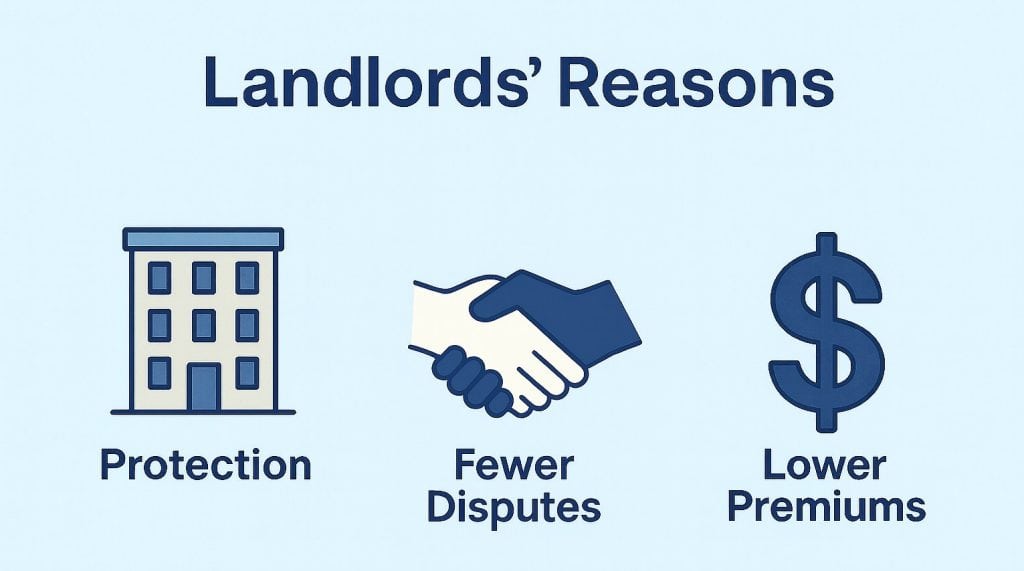
A landlord’s building insurance, which is a type of commercial property insurance, typically covers structural damage to the building but not accidents caused by tenants—like a kitchen fire or water damage that spreads to other units.
That’s where tenant liability coverage comes in. It handles the costs of accidental damage, which keeps landlords from filing claims on their own policy or pursuing tenants directly for repair costs.
There’s also a financial incentive at play. Properties where all tenants have coverage are considered lower risk, which helps landlords qualify for reduced premiums—and for landlords managing multiple units, those savings can add up significantly over time.
Bottom line, requiring renters insurance is both a protective measure and a cost-saving strategy.
Why Do Landlords Want Tenants to Have Renters Insurance?
Landlords require renters insurance primarily to cover accidental damage their own building insurance won’t, minimize disputes over who’s responsible for specific damages, and qualify for discounts on the commercial insurance premiums they’re required to carry.
A landlord’s building insurance, which is a type of commercial property insurance, typically covers structural damage to the building but not accidents caused by tenants—like a kitchen fire or water damage that spreads to other units.
That’s where tenant liability coverage comes in. It handles the costs of accidental damage, which keeps landlords from filing claims on their own policy or pursuing tenants directly for repair costs.
There’s also a financial incentive at play. Properties where all tenants have coverage are considered lower risk, which helps landlords qualify for reduced premiums—and for landlords managing multiple units, those savings can add up significantly over time.
Bottom line, requiring renters insurance is both a protective measure and a cost-saving strategy.
Do Apartment Complexes or Housing Programs Require Renters Insurance?
Whether you’re renting a unit in an apartment complex or living in subsidized housing, the requirement comes down to your landlord. No government housing program mandates renters insurance on its own, but landlords can still include it as a lease condition regardless of property type.
Large property management companies are more likely to require coverage. Corporate-owned complexes that manage hundreds or thousands of units typically adopt standardized lease policies, and renters insurance is often built into those requirements to protect their investments.
Generally speaking, the bigger the operation, the more likely they’ll require all tenants to carry coverage. Smaller landlords or individual property owners vary more in their approach, but the trend across the rental industry has been moving toward requiring it.
Before signing any lease, read the insurance section carefully and ask your landlord or property manager about their specific requirements.
Is Renters Insurance Required Before or After Signing a Lease?
Most landlords require proof of renters insurance before you move in, though some allow a short grace period after signing the lease.
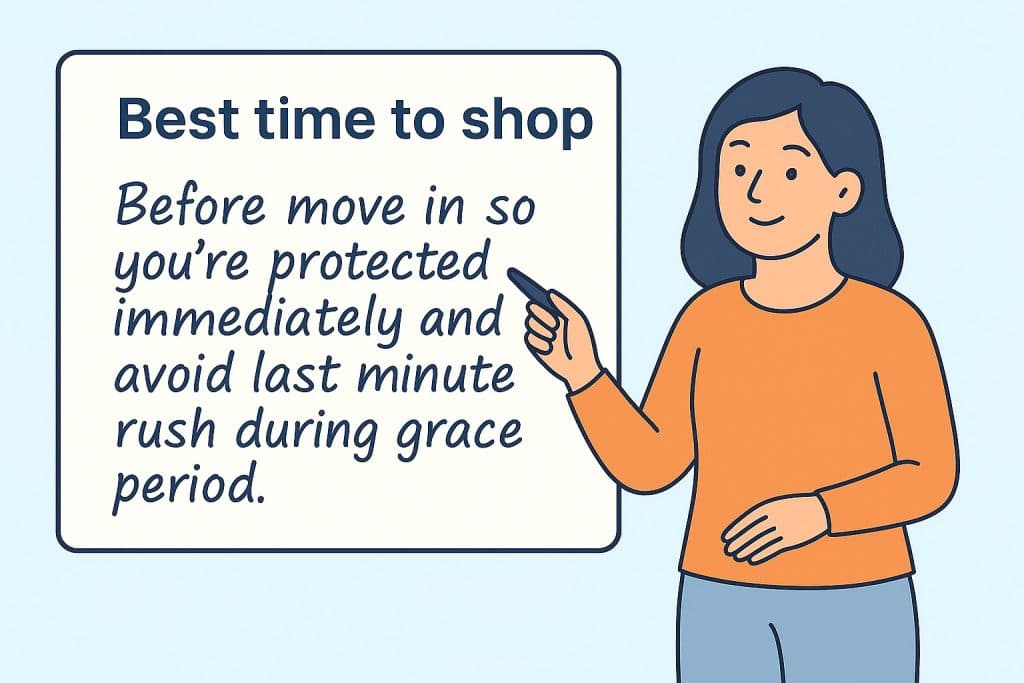
Timing varies by landlord, but most want coverage active the moment you take possession of the unit. Some even request proof before you sign the lease.
Grace periods do exist, especially with smaller property owners or more flexible landlords who might give you 7 to 30 days after signing. However, these aren’t guaranteed.
The smartest approach is shopping for insurance as soon as your lease is approved. This gives you time to compare quotes, understand your coverage options, and set a policy start date that matches your move-in.
FAQs
Can my landlord evict me for not having renters insurance?
Yes, if your lease states that renters insurance is required, failure to maintain it can lead to eviction.
Do apartment complexes usually require renters insurance?
Yes, most modern apartment complexes and management companies include it in their lease terms.
Can I get renters insurance after signing my lease?
Yes, you can buy a policy anytime, but landlords may require proof before move-in.
Do I need renters insurance before signing my lease or after?
Usually before, but some landlords offer a grace period after signing.
Bottom Line: What You Need to Remember
These are the most crucial points to keep in mind as you move forward:
- You won’t be held liable by the government for skipping coverage, but your landlord can deny your lease or issue violations if their agreement requires it.
- Corporate-owned complexes and large property management companies will almost always require renters insurance.
- Shop for insurance as soon as your lease is approved to avoid delays at move-in and to compare coverage options without pressure.
- Failing to get required coverage can result in denied occupancy, lease violations, or even eviction proceedings if you’re already living in the unit.
The reality is simple: while renters insurance isn’t legally required, it’s practically required if your landlord says so. But don’t just think of it as something you’re being forced to buy. Renters insurance offers valuable protection for your belongings and personal liability, often at a very reasonable cost.
So, even though you’re meeting your landlord’s requirement, you’re also securing solid coverage for yourself—making it a smart choice for your peace of mind, not just to satisfy the lease.