Do I Need Renters Insurance? |The Smart Move

Renters insurance is necessary for most renters because landlords increasingly require it as a lease condition. Beyond meeting that requirement, it also provides essential protection from liability and financial loss if you’re held responsible for accidents or damage involving your rental unit.
Even if your landlord doesn’t require it, going without renters coverage simply doesn’t make sense. For roughly $300 a year, you’re protecting yourself from potentially thousands in unexpected expenses that a single mishap could create.
In the end, the decision comes down to your landlord’s lease terms and whether you want this protection for yourself. But keep in mind that renters insurance is one of those policies where the cost-to-benefit ratio is exceptionally favorable—making it a smart investment regardless of any requirements.
Key Points
- Landlord’s insurance never covers tenant liability—you’re responsible for what happens in your unit
- Liability protection matters more than personal belongings value—that’s what renters insurance is really for
- No law requires renters insurance, but going without exposes you to significant out-of-pocket costs
- Personal property coverage is adjustable, but liability coverage comes in standard ranges
Why Do I Need Renters Insurance If My Landlord Has Insurance?
Your landlord’s insurance protects the building structure—walls, roof, foundation, and plumbing systems—but it doesn’t cover anything you own or any liability you face as a tenant. Their policy exists to protect the property itself, not to provide coverage for you.
When something goes wrong inside your unit, you’re financially responsible for the consequences. Your landlord’s policy won’t step in to help you, regardless of how the damage occurred or what your personal situation looks like.
Renters insurance fills this protection gap by covering what you’re actually liable for as a tenant. Without your own policy, you’re completely exposed to costs that your landlord’s insurance will never cover—no matter your age, income, or living situation.
Do I Need Renters Insurance If I Don’t Own Expensive Things?
Renters insurance isn’t mainly about protecting personal belongings—it’s about liability coverage. The cost of potential claims or problems you could face as a renter can be far greater than anything you own.
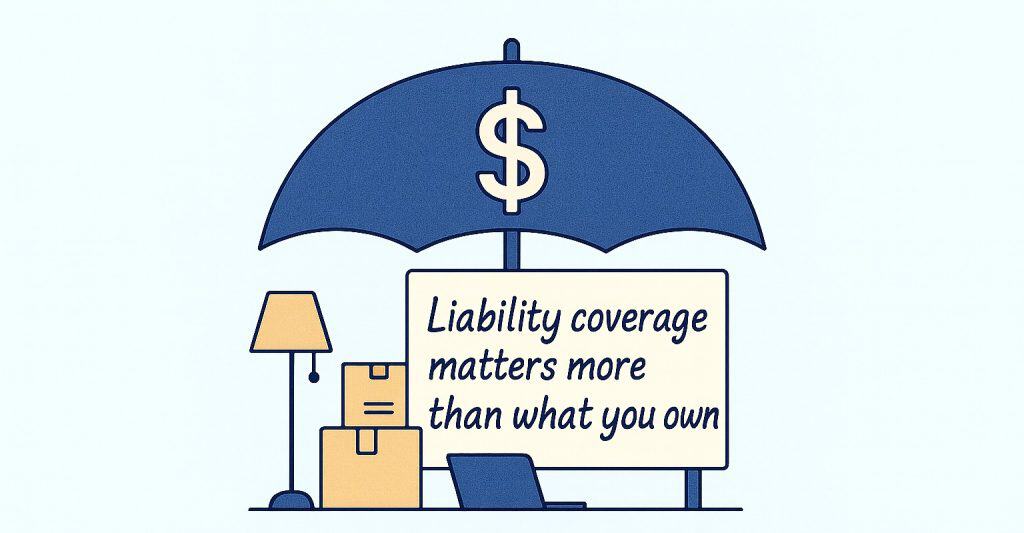
The real financial danger isn’t losing your furniture or electronics. It’s facing a liability claim when an accident in your unit causes damage inside and beyond your apartment or injures someone, leaving you responsible for repair costs and medical bills without protection.
Even basic policies provide full liability coverage regardless of how little you insure your belongings for. You can choose low coverage limits that match your modest possessions while still getting complete protection against catastrophic financial claims.
The property coverage becomes a helpful bonus that lets you replace essentials without draining savings. But the liability protection is what truly justifies the cost, shielding you from financial devastation that has nothing to do with what you own.
Can You Go Without Renters Insurance?
You can legally go without renters insurance if your landlord doesn’t require it—no state or city law mandates coverage for renters. However, you’ll need to consider the financial consequences of being uninsured, which often make skipping coverage an illogical decision.
Choosing to go uninsured means you’re personally responsible for every dollar of damage or liability. When you think about it, the financial risk makes skipping coverage impractical.
One moderate incident—a $3,000 fire, $5,000 liability claim, or major water damage—can create expenses taking years to repay, while annual premiums typically cost under $300.
Beyond money, being uninsured affects your rental history. Landlords view uninsured tenants as higher risk, leading to denied applications, larger deposits, or requirements to pay several months’ rent upfront when moving.
Should I Get Renters Insurance Even If My Landlord Doesn’t Require It?
Your landlord not requiring coverage doesn’t eliminate your risk. Theft, fires, water damage, and liability claims happen regardless of lease requirements, and you remain financially responsible when they occur in your unit.
Damages and accidents happen without warning in any living situation—a tipped candle, burst pipe, break-in, or guest injury during dinner.
None of these scenarios check your lease first, and your financial responsibility stays the same whether coverage is optional or mandatory.
Choosing protection proactively demonstrates financial responsibility beyond meeting minimum obligations. It’s the kind of planning that prevents financial emergencies and builds long-term stability, serving you well beyond just insurance decisions.
How Much Renters Insurance Coverage Do I Need?
Your coverage should reflect what replacing everything you own would actually cost at current prices. Do a quick inventory of your personal belongings—furniture, electronics, clothing, kitchenware, and other items—to estimate your total value accurately.
As far as coverage ranges go, personal property coverage typically ranges from $20,000 to $50,000, while liability coverage ranges from $100,000 to $300,000 with most basic policies starting at $100,000 for liability.
Certain valuables like jewelry, art, instruments, or high-end electronics often have policy sub-limits (maximum payout amounts for specific categories) around $1,000 to $2,500. If you own expensive items, adding scheduled personal property endorsements ensures full protection without gaps.
Whatever you do, make sure you don’t under-insure yourself just to save a few dollars on premiums. Get quotes for different coverage levels to see the actual cost difference—you’ll often find that bumping up your coverage only adds a modest amount to your monthly premium, making it worth the extra protection.
Bottom Line: Summary of What to Remember
These are the most crucial points to keep in mind as you move forward:
- Your landlord’s building insurance doesn’t protect you from liability or replace your belongings—those financial responsibilities fall entirely on you as the tenant.
- The real value of renters insurance isn’t protecting your couch or laptop—it’s shielding you from liability claims that can cost tens of thousands of dollars.
- While no law forces you to buy renters insurance, going without coverage means paying for damages, lawsuits, and displacement costs completely out of pocket.
- Whatever you do, don’t under-insure yourself just to save a few dollars on premiums—the cost difference between adequate and minimal coverage is usually modest, but the protection gap can be devastating.
Don’t forget: Renters insurance has shifted from optional to essential. One incident without proper coverage can create financial hardship that drains your savings and impacts your stability for years to come.